Koan What Is Buddha Do Not Say That Dirty Word Again
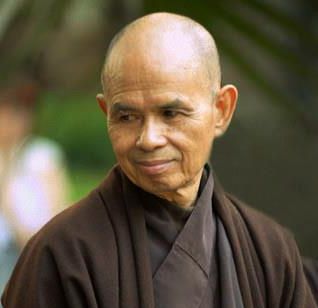
Zen Master Thich Nhat Hanh's compassionate response to the persecution of his students in Vietnam
"The koan "Bat Nha" is everyone'due south koan; it is the koan of every individual and every community. The koan tin be practiced by a Bat Nha monastic, by a monk or nun studying at a Buddhist Institute in Vietnam, a Venerable in the Buddhist Church of Vietnam, a police officeholder, a Catholic priest, a Protestant government minister, a Politburo fellow member, a fellow member of the Central Committee, a newspaper or mag editor, an intellectual, an creative person, a businessman, a instructor, a announcer, an abbot or abbess, an international politician or ambassador. Bat Nha is an opportunity, considering Bat Nha can assistance y'all see clearly what y'all couldn't – or didn't want – to see before."
Exercise not just expect for what you lot want to see,
that would be futile.
Practise not look for anything,
but allow the insight to have a gamble to come past itself.
That insight will help liberate you – Nhat Hanh
Bat Nha is a monastery in the central highlands of Vietnam, it is a community of monks and nuns existence persecuted by the Vietnamese government, and information technology is the great crunch of Vietnamese Buddhism at the dawn of the 21st Century.
A koan (known in Chinese as a gong an [公案], and in Vietnamese as a cong an [công án]) is a meditation device, a special kind of Zen riddle. Koans are solved not with the intellect but with the practice of mindfulness, concentration and insight. A koan can be contemplated and skillful individually or collectively, but and so long every bit it remains unsolved, a koan is unsettling. It is like an arrow piercing our body which we cannot take out; and then long as it is lodged there we tin neither exist happy nor at peace. Yet the koan's pointer has non really come from outside, nor is it a misfortune. A koan is an opportunity to look deeply and transcend our worries and confusion. A koan forces us to accost the great questions of life, questions about our hereafter, nigh the hereafter of our country and about our own truthful happiness.
Some of the best known Zen koans include "The cypress in the courtyard", "If everything returns to the one, where does the one return to?", "Does a dog accept Buddha nature?", and "Who is invoking the Buddha's proper noun?" Vietnam'south bully leaders and statesmen have long practiced the art of contemplating koans, and contributed many famous ones of their ain1. Zen Master Tue Trung, whose brother Full general Tran Hung Dao repelled Genghis Khan's invasion, offered the powerful koan "All phenomena are impermanent. Everything that is born must finally dice. What is born, and what dies?"
A koan cannot be solved by intellectual arguments, logic or reason, nor by debates such every bit whether there is only mind or affair. A koan can simply be solved through the ability of right mindfulness and right concentration. One time we have penetrated a koan, we feel a sense of relief, and have no more than fears or questioning. We see our path and realize great peace.
"Does a dog have Buddha nature?" If you think that it's the dog'due south problem whether or not he has Buddha nature, or if you remember that it's just a philosophical conundrum, then it'southward non a koan. "Where does the one render to?" If you remember this is a question about the movement of an external objective reality, and so that is not a koan either. If y'all remember Bat Nha is just a problem for 400 monks and nuns in Vietnam, a trouble that merely needs a 'reasonable and appropriate' solution, so that as well is non a koan. Bat Nha truly becomes a koan only when y'all sympathise it equally your own problem, ane that deeply concerns your own happiness, your own suffering, your own future and the futurity of your country and your people. If you cannot solve the koan, if you cannot slumber, eat or piece of work at peace, then Bat Nha has become your koan.
'Mindfulness' ways to recollect something, to hold it in our middle day and night. The koan must remain in our consciousness every second, every infinitesimal of the solar day, never leaving us even for a moment. Mindfulness must be continuous and uninterrupted; and continuous mindfulness brings concentration. While eating, getting dressed, urinating and defecating, the practitioner needs to bring the koan to mind and await deeply into it.The koan is ever at the forefront of your mind. Who is the Buddha whose proper noun we should invoke? Who is doing the invoking? Who am I? Yous must find out. And then long as you lot oasis't found out you haven't fabricated the quantum, you are not notwithstanding fully awake, you have not understood.
I AM A MONASTIC FROM THE BAT NHA Customs. Bat Nha is my koan and I have the opportunity to look securely into it in every moment of my daily life. Every day I contemplate the koan of Bat Nha – I sit down with it in meditation, I walk with it in mindfulness, I am with information technology when I cook, when I wash my clothes, pare vegetables or sweep the floor; in every moment Bat Nha is my koan. I must produce mindfulness and concentration, considering for me it is a affair of life and death, of my ideals and my future.
We know we've been successful in our do, because despite all the oppression and harassment, many of u.s. in our community can notwithstanding laugh and exist fresh every bit flowers. Nosotros are withal able to generate peace and beloved, and not be dragged down by worries, fears or hatred. Yet in that location are those of us who are still suffering, weighed down by the trauma of the days when Bat Nha and Phuoc Hue Temple were attacked. I of the nuns offered an insight poem to our teacher. She wrote, "The Bat Nha of yesterday has become pelting, falling to the earth, sprouting the seed of enkindling." This nun is barely xviii years old, not even two years ordained, but she has successfully penetrated the koan of Bat Nha.
All we desire is to practice – why tin can't nosotros? The senior monks of Vietnam want to protect and sponsor us – so why does the government terminate them? We don't know annihilation about politics, it doesn't interest us at all – and so why practice they keep accusing usa of meddling in politics and saying Bat Nha is a threat to national security? Why was dispersing Bat Nha and then important that they had to resort to using hired mobs, slander, cant, beatings and threats? The attackers were the historic period of our fathers and uncles; how could they take washed that to us? If the authorities forbids us from living together and forces u.s.a., down to the concluding person, to besprinkle in all directions, how volition our community ever be reunited? Why is it that in other countries people can exercise this tradition freely, and we can't?" These questions come up relentlessly and will non go away. They yearn to be answered.
During the time of sitting meditation, walking meditation, or listening to a Dharma talk; while cooking, gardening, or doing other work in mindfulness, nosotros generate the energy of mindfulness and concentration. This energy is like fire that burns abroad all the haunting thoughts and questions.
The Bat Nha of yesterday was happiness. We could be true to ourselves and alive the way nosotros wanted to live. For the kickoff time in our lives we were in an environment where we could speak openly and share our deepest thoughts and feelings with our brothers and sisters – without suspicion, without fright of expose. We had the opportunity equally young people to serve the earth, in the spirit of true brotherhood and sisterhood. This was the greatest happiness. Then Bat Nha became a nightmare, but no-i will always take from us the inner freedom we discovered in that location. I have institute my path. Whether or not Bat Nha exists, I am no longer afraid. I tin can see that Bat Nha has get pelting, helping the indestructible diamond seed of awakening to sprout within us. Even though we were forced from Phuoc Hue, and Bat Nha is no more than, the seeds of awakening that have been planted in our hearts can never be taken away. Thay has taught each one of his students to become a Bat Nha, a Phuong Boiii. We are Thay's continuation and we know that we volition make many more Bat Nha's and Phuong Boi's in the time to come.
We already take the seed and nosotros already have our path, so nosotros are no longer afraid for the future – our own, or that of our country. Tomorrow nosotros volition have the chance to help those who persecute us today. They may not run into that now, but later they will empathize. We know that many of those who attacked us and fabricated us suffer have already begun to see the truth. Prejudices and wrong perceptions like those that built the Berlin Wall somewhen collapse and disintegrate. There is no need to worry or despair. Nosotros can laugh equally brightly as the morn sun.
I AM A CHIEF OF Police force IN VIETNAM. At offset, I believed that the order from my superiors to wipe out Bat Nha must have been justified, that it must have been in the interests of national security. I trusted my superiors. Withal, as I carried out the lodge, I saw things that broke my heart. Bat Nha has become a koan for my life. I can't eat, I can't slumber. I toss and turn throughout the night. I ask myself, What take these people done, that I should treat them every bit reactionaries and threats to public prophylactic? They seem so peaceful – but I have no peace at all. If I don't take peace in my heart, how can I continue the peace in my society?
The young monks and nuns have not broken whatever laws. In fact we were the ones who collaborated with those who seized their property. We forced them to leave the place they helped to build, where they had been living peacefully for years. We tried everything to force them out, yet they held their ground. They seemed to have so much honey for each other – at that place seemed to exist something that jump them together. They lived with such integrity. Even though they were young, none of them was pulled into smoking, drug abuse or empty sex. They lived merely, ate vegan food, sat in meditation, listened to sutras, shared with each other and did no harm to anyone. How tin we say they are dangerous? They have never said or done anything against the government. Nosotros cannot truthfully say they are reactionaries or involved in politics. And nevertheless we have accused them of that and driven them out by every possible ways: we threatened them, we cutting off their electricity and water, nosotros went every night for many months to harass them, demanding to come across their identification papers, over and over once more; we did everything we could to pause their spirit. Only they never said a reproachful word, they offered the states tea, they sang for u.s. and they asked to have souvenir photos with us.
In the end we hired mobs to destroy their community, to assail them and expel them. Nosotros had to be there wearing plainclothes to identify and unmarried out the leaders and then the thugs could neutralize and abduct them. Non once did they fight dorsum. Their only weapons were chanting the Buddha's proper noun, sitting in meditation, and locking arms to end us from separating them as we forced them into the waiting cars. Central government even sent a Major General to coordinate the attack. Why did we need to mobilize such a massive force, from the central to the local authorities, to pause upward a group of young people with empty hands and innocent hearts?
And why did information technology take us more than a year to kick them out? What was there in the temple that made them then determined to stay? Every day they had just two vegan meals, iii sessions of sitting meditation, 1 lecture and ane session of walking meditation. Why were there so many of them, so immature and yet living so harmoniously with each other? Some of them had university diplomas, some were sons and daughters of high-ranking officials, some had had careers and loftier-paying jobs; only they left it all behind for a humble life. What was so good there that it attracted so many young people? How can nosotros merely say that they were tricked by the honeyed words of a person living in the Westward into opposing the government?
My orders came from above and I had to obey; but I feel deeply aback. At beginning I thought they were just temporary measures, for the greater skilful of the state, for the sake of preserving national unity. Now I know that the whole operation was deceitful, cruel and offensive to human conscience. I am forced to keep these thoughts to myself. I don't dare to share them with the officers in my unit, let lone my superiors. I can't get forward and I tin't go back; I am a cog in a car and I can't go out. What must I practise to be truthful to myself?
I AM A Fellow member OF THE BUDDHIST CHURCH OF VIETNAM. Bat Nha haunts me nighttime and day. I know those immature monastics are practicing the true Dharma. Everyone who has come into contact with them confirms this. So why are we powerless to protect them? Why do we accept to live and comport like government employees? When will I realize my dream of practicing faith without political interference? During the periods of foreign colonization, or the Diem and Thieu regimes, Buddhists faced hardships; but monastics were never as tightly controlled as they are at present. What the officials want today is a Buddhism based on blind faith and rituals, not a Buddhism that offers truthful spiritual guidance and has the capacity to promote an ethical way of living. They are afraid of a Buddhism that offers powerful spiritual leadership, and only take religious organizations that tin be controlled and manipulated. But when the Buddha was alive, he refused to submit to domination, even that of King Ajatasattu. During the French colonization and the Diem, Ky and Thieu regimes, our ancestors fought for liberty. Why are we not standing that work? Why have nosotros immune ourselves to become the instruments of a policy that is trampling our ideal of service, our noble aspiration of enkindling?
At outset, I thought that if I went along with the authorities, I would at least have a take chances to do some of the 'Buddha'south work,' whereas if I opposed the government totally then I wouldn't be able to practise annihilation. Then I had to silently suffer the criticism and scorn of my colleagues for beingness in the system. Later on a while, nevertheless, I saw that it was thanks to the ability and courage of those outside the Buddhist Church to voice their protests that I was permitted to exercise Buddhist piece of work, admitting in a limited way. When the history of Vietnamese Buddhism is written, how will I answer for this? My aim was to revive Buddhism in order to serve the people and the nation, not to become office of a system that exists to monitor and command Buddhists.
That venerable, who was pressured into withdrawing his sponsorship for the monks and nuns to stay and practise at his temple: he did not have the strength to resist. He was compelled to betray his teacher and his friends and break the deep vow he made just a few years ago. It is a tragedy for him. But who is that monk? Is he someone else, or is he none other than myself? He is in me. I am also being pressured, and don't dare to do or say what I really believe in order to protect my spiritual children and young brothers and sisters. Isn't information technology my deepest desire to 'Guide the time to come generations, and repay my debt of gratitude to the Buddha?' If so, and so how tin can I justify the fact that I stood by helplessly and watched as the young monks and nuns, my spiritual descendents, were oppressed, humiliated and trampled upon? How tin can I dare to look my spiritual children, my continuation, in the eyes? What is my true face? Who am I?
Nosotros are brothers and sisters, children of the Buddha. Is it because our practise of brotherhood is not solid enough that they have been able to divide us, that nosotros have fallen into blaming and antisocial each other? According to the Buddha's teaching of not-dualism, whether nosotros follow the Unified Buddhist Church building or the Buddhist Church of Vietnam, we are still brothers and sisters in the same family. We can exercise what we have to do without fighting or opposing each other, without having to consider each other as enemies. Has this enmity arisen because our practice is all the same weak? Has this happened considering our spiritual power is not great enough? But surely nosotros have learned a lesson: if we can have each other and reconcile with one another, we can nonetheless resurrect our brotherhood and sisterhood, inspire the confidence of our fellow citizens and be role models for everyone. Even though we've left information technology until it'south too tardily, the situation can still be saved. But one moment of enkindling is plenty to change the situation.
It seems the monks and nuns of Bat Nha have learned this lesson. Fifty-fifty when they were attacked and expelled they never showed any resentment toward the venerable abbot who had taken them in during these years. They knew that he was under intense pressure to strength them out and that somewhen he crumbled. If we in the Buddhist Church take been cornered into betraying our ain brothers and sisters information technology is because our spiritual integrity is non yet stiff plenty. How can nosotros be wholehearted and determined plenty in our daily exercise to attain the spiritual strength we need? Only when we understand can we honey. When we love each other we cannot come across each other equally enemies. Equally long every bit we run into each other as enemies, we will fall prey to schemes of division and separation.
Bat Nha isn't just an effect for the Central Buddhist Church building of Vietnam to resolve. Bat Nha is a koan, the claiming of our lives. How can nosotros solve it in such a way that we are not ashamed before our ancestors? Why can't I share my thoughts and feelings with my friends in the Central Buddhist Church of Vietnam? Why aren't nosotros allowed to harmonize our views? Why practise we have to hibernate our thoughts and feelings?
Vietnamese Buddhists have respected and followed the Buddha, the Dharma and the Sangha for the last 2 thousand years. Simply now groups of people were hired who wore shoes into the Buddha Hall, who put up offensive banners on the altar, who yelled and cursed and threw human excrement at venerable monks, who destroyed sacred objects, and who violently attacked, shell and expelled monks and nuns from their temple. It was government officers who hired them and said they were Buddhists. This is an ugly stain on the history of Buddhism in Vietnam. It disgusts u.s. and sickens the states, yet why don't nosotros dare to speak out? Can the Buddhist Church of Vietnam, whose members were slandered, falsely accused and framed by the authorities, shake off this insult and prove the innocence of Vietnamese Buddhists?
I AM A Loftier RANKING Member OF THE COMMUNIST Authorities OF VIETNAM. Bat Nha is an opportunity for me to look deeply at the truth and find peace in my own centre and mind. If I don't take peace, how can I accept happiness? Only how tin can I have peace, when I don't really believe in the path I walk on, and especially when I don't have faith or trust in those I call my comrades? We may be bedfellows, but are we dreaming dissimilar dreams? Why tin't I share my real thoughts and feelings with those I phone call my comrades? Am I afraid of being denounced? Of losing my position? Why do nosotros all accept to say exactly the same things when none of us believe information technology? Isn't this a case of The Emperor's New Clothes, where all the members of the Emperor'southward court swear the Emperor is wearing a beautiful robe, when in fact he is completely naked?
My greatest dream is for my own happiness to be in harmony with my country's. Just as trees have their roots and water has its source, our homeland has its heritage of spiritual insight. The Ly dynasty was the most peaceful and compassionate dynasty in our country's history. Under the Tran dynasty, the People'southward unity was strong enough to enable them to push back the attacks from the North. This unity was possible cheers to Buddhism'due south contribution every bit an inclusive and accepting spiritual path, that could co-be with other spiritual and ethical traditions, such as Taoism and Confucianism, and so build a country that never needed to expel or eliminate anyone.
I've had the opportunity to study. I know Buddhism is not a theistic faith only is solidly humanist. Buddhism is open-minded and undogmatic; information technology has the spirit of rational enquiry. In the new century, Buddhism can get hand in mitt with scientific discipline. 'Science' here means the spirit of scientific inquiry, the willingness to let go of old views in guild to embrace new ones that are closer to reality. Mod science has gone far beyond traditional science, especially in the area of quantum physics. Is what I took for science in the by even so science today? Mind and thing are only 2 manifestations of one reality. They contain one another and depend on 1 another to manifest. Modern scientific discipline is putting all its energy into overcoming dualistic means of thinking – about mind and affair, inside and outside, subject and object, infinite and time, mass and speed, and and then on. If I am still caught in my anger, anxiety, craving and bigotry, then my mind cannot exist collected and concentrated enough to see the truth. No thing how sophisticated the instruments are that I use, behind all that engineering in that location is withal the mind that observes.
In my heart I know that the people supported the revolution so strongly considering they loved their land, not an ideology. If the people's support had been based only on an ideology, and not on their deep love for the country, then we would surely have failed. I know that in the 1940s some of us, out of zealous and fanatical devotion to an ideology, crushed and assassinated revolutionaries fighting aslope u.s.a. against strange aggressors. To this twenty-four hour period, the wounds of that time have not been healed.
Equally for class struggle, I should ask myself: Which class is holding power at present? The proletariat or the capitalists? Is in that location such a thing every bit 'The People's Commercialism', or is that merely a convenient fiction?
If we want to be successful, the Political party'southward policy must reflect the People's deep wishes (Y Dang, Long Dan). The People's deep wish is for monks and nuns to accept the freedom to practice and aid the world according to their platonic, in line with the laws of the land. The People's deep wish is for every citizen to be able to speak his or her mind without fear of denunciation or arrest. The People's deep wish is to separate religion from political affairs, and take the politics out of organized religion. If the deep wishes of the People are satisfied, then there will naturally be unity, and the Party will be supported. If the Party were in harmony with the hearts of the People, the Political party would no longer need to appeal for unity or back up. Such is the wish of the People. What is the policy of the party?
I know that during the Tran and Ly dynasties, Buddhism'southward spirit of inclusiveness united the whole nation. Cheers to that spirit, everyone who loved their state had an opportunity to contribute to the piece of work of building and protecting the nation, and no-i was excluded. This spirit of inclusiveness in Buddhism is chosen 'equanimity', and is ane of the 4 Buddhist virtues, alongside loving kindness, compassion and joy. Inclusiveness is a precious spiritual heritage, a cultural treasure. I know that during the Ly and Tran dynasties, kings and politicians proficient Buddhism just as the people did. By keeping the Buddhist precepts, following a vegetarian nutrition and doing good works, they were able to earn their people's trust and confidence.
How can we eradicate the hideous social evils of drug abuse, prostitution, gambling, violence, corruption and abuse of power, when the officials responsible for abolishing them are themselves caught upwards in those very evils? How can the authorities's policy of 'cultural districts' and 'cultural villages' always be successful if information technology is based simply on perfunctory inspections and punishment? Who is the one that needs to be inspected and who is the one that needs to be punished?
I know that whatever family that practices and keeps the mindfulness trainings enjoys peace, joy and happiness. For the concluding two g years, Buddhism has been didactics people how to live ethical lives, be vegetarian and proceed the trainings. Following a vegetarian diet is a sign of mastery over the peckish mind, of not giving in to desires. When Buddhists observe a vegetarian diet, keep the trainings and do good deeds, they practise then voluntarily and not by forcefulness or fearfulness of penalisation. At this very time, the young monks and nuns of Bat Nha are going in this direction, reinvigorating this ethical way of living. They have the potential to succeed. So why do we want to repress them and wipe them out? Are nosotros afraid that if they have mass back up, it will exist at our expense? Why can't I open my heart to do like them, to be one with them and benefit from their back up? Why can't we do as the kings of the Tran and Ly dynasties did? Just because we are Marxists, does that mean nosotros don't accept the correct to take refuge in the Buddha, Dharma and Sangha, to be vegetarian and exercise the mindfulness trainings?
I know that in the political party and in the authorities, many people now claim to be open up-minded towards religion and spirituality. In fact, all the top officials believe in things like feng shui, destiny, psychic powers and fifty-fifty the idea of extending i person's lifespan by transferring life-years from someone else. They have gone from one extreme to another. And yet they outwardly claim not to be superstitious.
The Ly and Tran kings truly believed in a path of virtue and spirituality. Many of them lived exemplary ethical lives, and the people had confidence in them and were inspired to do the same. One male monarch knew how to practice the mindfulness trainings, followed a vegetarian diet, sent blankets to prisons, and went out into towns and villages to come across the people and see the truth of how they lived and what they suffered. A rex who knows how to practise sitting meditation, expect deeply into koans, practice offset anew six times daily, write commentaries on sutras, take refuge in the wise counsel of a Zen master whom he respects every bit the national teacher, and yield the throne to his son in order to become a simple monk on Yen Tu mountain – such a king can exist a great case of morality for the whole nation.
Nowadays nosotros're ever urging authorities officials and ane another to "study and follow the virtuous example of Ho Chi Minh". But who is the one that is living a good instance for their comrades? Mahayana Buddhism teaches that "You take to be that person. You have to be the role model. You lot have to alive that way yourself. Simply and then will you lot give others the inspiration to practise the same." I accept to exist that person. I know that corruption and abuse of ability have get a national catastrophe. Nosotros have been lamenting information technology for and so many years already, and withal the situation just gets worse with every passing day. Why? Is it because I'm simply able to proudly boast of my ancestors' glorious by, and am not in fact able to exercise every bit they did? And today, when there are immature people actually doing information technology, why do we block and suppress them?
The Bat Nha situation may have started with a travel agency owned by a high police officer. Soon it involved hotels, then visas, and eventually the corruption of power and the exercise of revenge. Now it has go a policy the whole country has to follow. Maybe I take not taken the time to examine this. I only proceed with the false reports and casually let the people I am supervising to utilize lies, deception and oppression against these gentle people who never have caused any disturbance to gild. In the end I am put in a position where I become the enemy of the very things I once cherished. Are my true enemies really outside of me? My enemies are inside. Do I accept enough courage and intelligence to face my ain weaknesses? That is the fundamental question.
The Plum Village practices offer a rare opportunity to modernize Buddhism in Vietnam; the final four years have proved their effectiveness. Why are we allowing ourselves to be pressured past our powerful neighbour into persecuting and destroying such a precious living treasure? What will we get that is so precious, in return for destroying this treasure we already have?
The best way to celebrate the thousand-yr anniversary of Hanoi is to strive to practise, to live like our great ancestors Ly Cong Uan, Tran Thai Tong, Tran Thanh Tong, Truc Lam Dai Si, and Chief Tue Trung. They were politicians, but at the same fourth dimension lived a true spiritual life that they believed in. What accept I to be proud of, other than the legends of my ancestors? I accept lost my revolutionary ideal. I have snuffed out the sacred flame of my aspiration. My comrades are no longer truly my comrades because their own sacred flame of revolutionary idealism has gone out. They are only in the Party for self-interest, fame and condition. The Plum Village tradition is office of my country'due south cultural heritage and is contributing to a global cultural ethic – non just in theory but, most chiefly, in exercise. Then many people all around the world have heard nigh this tradition and are benefiting from these teachings. I should be proud of this, and so why did I allow the tradition to be attacked and wiped out in the very state where it was built-in? These are the questions that, if immune to penetrate and act upon the depths of my consciousness, can awaken the wisdom within. This volition give me the insight I need to run across the path and way out I have been longing for.
I AM A Head OF Country OR Foreign Minister. My land is or is not a member of the Security Quango or the UN Commission on Human Rights. I know that events similar Bat Nha, Tam Toa, Tiananmen Square and the annexation of Tibet are serious violations of Human Rights. Simply considering of national involvement, because our country wants to proceed to do business with them, because we want to sell arms, airplanes, fast trains, nuclear power plants and other technologies, because we want a market for our products, I cannot express myself frankly and brand existent decisions that tin can create pressure on that country then they cease violating human rights.
I feel ashamed. My censor is non at peace but considering I want my political party and my regime to succeed, I tell myself that these violations are non serious enough for my country to have a opinion. It seems that I too am defenseless in a organisation, a kind of mechanism, and I cannot actually be myself. I'thou non able to give voice to my existent feelings or to speak out about the state of affairs. What practise I have to do to get the peace that I and then badly need? Bat Nha is of class a situation in Vietnam, only it has as well go a koan for a high-ranking political leader like me. What path tin I take in order to actually be myself?
The koan "Bat Nha" is everyone'south koan; it is the koan of every individual and every community. The koan can exist expert by a Bat Nha monastic, by a monk or nun studying at a Buddhist Institute in Vietnam, a Venerable in the Buddhist Church of Vietnam, a constabulary officer, a Head of Department, a Catholic priest, a Protestant minister, a Politburo member, a Chairman of a city's People'south Committee, a Provincial Party Secretarial assistant, a fellow member of the Central Committee, a newspaper or magazine editor, an intellectual, an artist, a businessman, a teacher, a announcer, an abbot or abbess, an international politico or ambassador. Bat Nha is an opportunity, because Bat Nha tin help you see conspicuously what you couldn't – or didn't want – to see before.
In the Zen tradition, there are retreats of seven, twenty-one and xl-nine days. During these retreats, the practitioner invests their whole heart and mind into the koan. Every moment of their daily life is also a moment of looking deeply: when sitting, walking, animate, eating, brushing their teeth or washing their clothes. At every moment the mind is concentrated on the koan. The most pop retreat is the seven-day retreat. Every day the practitioner gets the chance to interact with the Zen master in the direct guidance session. The Zen chief offers guidance to assistance the practitioner straight their concentration in the correct fashion, opening upwards their mind and helping them to meet, showing them the situation then the truth can reveal itself conspicuously.
In the direct guidance sessions the truth is not transmitted from master to practitioner. Practitioners must realize the truth for themselves. The Zen master may requite nearly ten minutes of guidance, to open your listen and bespeak things out, and and so everyone returns to their ain sitting identify to continue to look deeply. Sometimes there are hundreds of practitioners, all sitting together in the meditation hall, facing the wall. Afterwards a period of sitting meditation, there is a menstruum of walking meditation. Practitioners walk slowly, each and every step bringing them back to the koan. At meal times, practitioners may eat at their meditation cushion. While eating they contemplate the koan. Urinating and defecating are also opportunities to look securely. Noble silence is essential for meditative enquiry, and that is why exterior the meditation hall there is always a sign that reads 'Noble Silence.'
In the by, Rex Tran Thai Tong became enlightened past investigating the two koans 'Four mountains' and 'A true person has no position'. Zen main Lieu Quan became enlightened thanks to his practise of the koan 'The all gain to the 1; where does the i go?'. He presented his insight at Tu Dam Temple in the urban center of Hue.
If you want to be successful in your practise of koans, you must be able to let go of all intellectual knowledge, all notions and all points of view y'all currently concord. If y'all are caught in a personal opinion, standpoint, or ideology, yous do non have enough liberty to allow the koan'due south insight to break forth into your consciousness. You have to release everything you accept encountered before, everything you take previously taken to be the truth. As long as you believe you already concur the truth in your mitt, the door to your heed is closed. Even if the truth comes knocking, you will not be able to receive it. Present knowledge is an obstacle. Buddhism demands freedom. Liberty of thought is the basic condition for progress. Information technology is the true spirit of scientific discipline. It is precisely in that infinite of freedom that the flower of wisdom tin bloom.
In the Zen tradition, community is a very positive element. When hundreds of practitioners silently look securely together, the commonage free energy of mindfulness and concentration is very powerful. This collective energy nourishes your concentration in every infinitesimal and every second, giving you the opportunity to have a breakthrough in your practice of the koan. This kind of environment is very different from that of a briefing, discussion or meeting. The house discipline of your meditation practice, the favorable surroundings for concentration, as well as the guidance of the Zen master and silent support of fellow practitioners, all provide you with many opportunities to succeed.
The suggestions given in a higher place can be seen equally direct guidance to help yous in your practice of looking deeply. You take to see these words equally an musical instrument, not as the truth. They are the raft that can bring you to the other shore; they are not the shore itself. Once you reach the other shore, you have to abandon the raft. If you are successful in looking deeply, yous will accept freedom, you volition exist able to come across your path. Then you can just fire these words, or throw them away.
I wish you all success in the piece of work of looking deeply into the Bat Nha koan,
Zen Master Thich Nhat Hanh
Sitting Still Hut, Upper Hamlet
Plum Village, French republic
19 January 2010
1. Long agone, Vietnam'south Male monarch Tran Thai Tong practiced Zen. He meditated on koans and contributed forty new koans, too as various invocations, recitations and short verses, for friends to exercise with him at the palace'due south Truthful Teachings Temple. These koans have been recorded in his volume, Instructions on Emptiness. Master Tue Trung, a lay man, equanimous 13 of his ain koans, which are recorded in the Record of Zen Primary Tue Trung. The Blueish Cliff Record, edited by Zen master Yuan Wu in the twelfth century, has over 100 koans complete with teachings, commentaries and guidelines. This classic has been used by Zen practitioners for centuries.↩
2. Thich Nhat Hanh'southward first monastery, Fragrant Palm Leaves, founded in the 1960'south near where Bat Nha was subsequently built.↩
Source: https://plumvillage.org/about/thich-nhat-hanh/letters/bat-nha-a-koan/
0 Response to "Koan What Is Buddha Do Not Say That Dirty Word Again"
Post a Comment